
Background
Agriculture remains a cornerstone of Uganda’s economy, contributing approximately 26.2% to the national Gross Domestic Product (GDP) in the fiscal year 2024/25, up from 24.7% in the previous year (Uganda Bureau of Statistics [UBOS], 2025). The sector employs about 66% of the country’s workforce, reflecting its central role in sustaining livelihoods and supporting economic stability (World Bank, 2022). Uganda covers a total land area of 241,559 square kilometres, with 80% classified as arable land; however, only about 35% of this arable land is currently under cultivation, highlighting significant potential for agricultural expansion (International Trade Administration [ITA], 2023). The country’s favourable climate and fertile soils provide an excellent foundation for diverse agricultural activities, including crop production and livestock farming.
The agriculture market in Uganda was valued at USD 4.07 billion in 2023 and is projected to grow to USD 6.21 billion by 2031, representing a compound annual growth rate (CAGR) of 4.20% (Mordor Intelligence, 2024). This trajectory is supported by government initiatives such as the Parish Development Model and the Agricultural Credit Facility, which aim to enhance productivity and market access. Uganda’s agricultural exports continue to show strong performance, with coffee, cocoa, and tobacco among the leading earners. In February 2025, coffee export earnings more than doubled to USD 167.68 million, up from USD 82.56 million in the same month the previous year, while cocoa export receipts increased by 164.4% to USD 68.7 million (Bank of Uganda [BoU], 2025). These figures underscore the sector’s potential to boost foreign exchange earnings and rural incomes. Nevertheless, constraints such as low mechanisation, postharvest losses, and limited market access remain, making it imperative to address these challenges to unlock the full potential of Uganda’s agricultural sector and secure sustainable growth.
Agriculture Commodity Markets and Trade – Seasonal Summary
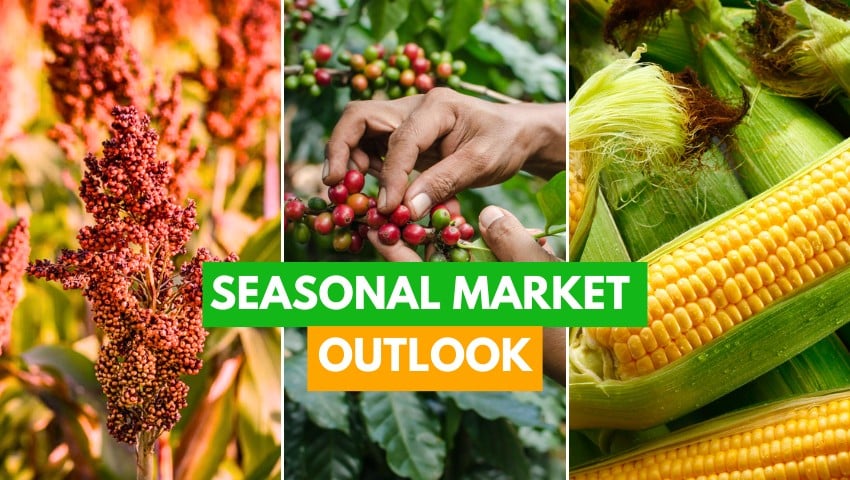
From March to July 2025, Uganda’s commodity markets reflected seasonal harvest patterns and weather-driven supply constraints. In the bimodal regions, maize prices started high in March, retailing at UGX 1,100 to 1,300 per kilogram in Kampala, and rose slightly in April due to delayed planting and limited on-farm stocks (Famine Early Warning Systems Network [FEWS NET], 2025). As early harvests arrived in May and June, wholesale and farmgate prices in production hubs such as Mubende and Masindi softened to UGX 900 to 1,000 per kilogram, but urban retail prices adjusted more slowly due to high transport costs and trader margins. Beans followed a similar trend, averaging UGX 4,600 to 4,700 per kilogram wholesale in Kampala in March and April before falling slightly with the first-season harvest in June. By July, prices rebounded in urban markets to UGX 5,200 per kilogram as supplies tightened. Groundnut and millet prices remained firm through most of the period, with millet retailing at UGX 4,500 to 5,000 per kilogram and groundnuts at UGX 5,700 to 6,500 per kilogram.
In unimodal Karamoja, maize and sorghum prices remained atypically high from March to May due to dependence on imports from Teso and Lango. Sorghum sold for UGX 1,800 to 2,000 per kilogram during this lean period, easing slightly in late June as short-cycle beans and cowpeas reached markets. However, July prices still exceeded the five-year average by about 18 to 20 percent. Livestock markets across both rainfall zones strengthened as pasture conditions improved from May onward. In July, cattle fetched UGX 1.4 to 1.6 million in Moroto and Kotido, while goats sold for UGX 200,000 to 230,000 depending on size and breed. Beef prices remained high in urban centres, retailing at UGX 15,000 to 18,500 per kilogram, while fresh milk prices ranged from UGX 1,100 in Mubende to UGX 2,100 in Mbarara.
Coffee remained a major foreign exchange earner, with Robusta FAQ performing strongly in May and June before prices dropped in July. Farmgate prices for clean Robusta averaged UGX 14,000 per kilogram in March to May, supported by strong export demand (Uganda Coffee Development Authority [UCDA], 2025). According to UCDA and the International Coffee Organization, exports between March and July totalled approximately 3.1 million 60-kilogram bags, about 6 percent higher than the same period in 2024, with Italy, Germany, and Sudan as top buyers. By July, peak harvest inflows in Central, Western, and Eastern coffee zones, coupled with subdued global demand, pushed farmgate Robusta FAQ prices down to UGX 9,000 to 12,500 per kilogram. This decline at the Kiboko stage compressed margins for farmers and traders, especially in districts like Luwero, Hoima, and Kamuli where coffee is a key income source.
Overall, the March to July period was shaped by initial tight supplies and high prices in March and April, easing in May and June with the bimodal harvest, and mixed trends in July. Staple prices generally remained stable to slightly higher, livestock markets were buoyant, and coffee entered a post-harvest price slump. Regional trade remained active, with maize and beans moving from western and central surplus areas toward Kenya and South Sudan, and sorghum from eastern Uganda into Karamoja and across the border into South Sudan.
To learn more about the seasonal market performance of the first season of 2025, average retail market price performances, the impact of seasonal performance on food security, and recommendations, download this publication (Seasonal Market Outlook 2025 – Issue No.5).